KTH, NTU Singapore and Ericsson join forces to advance trustworthy 6G
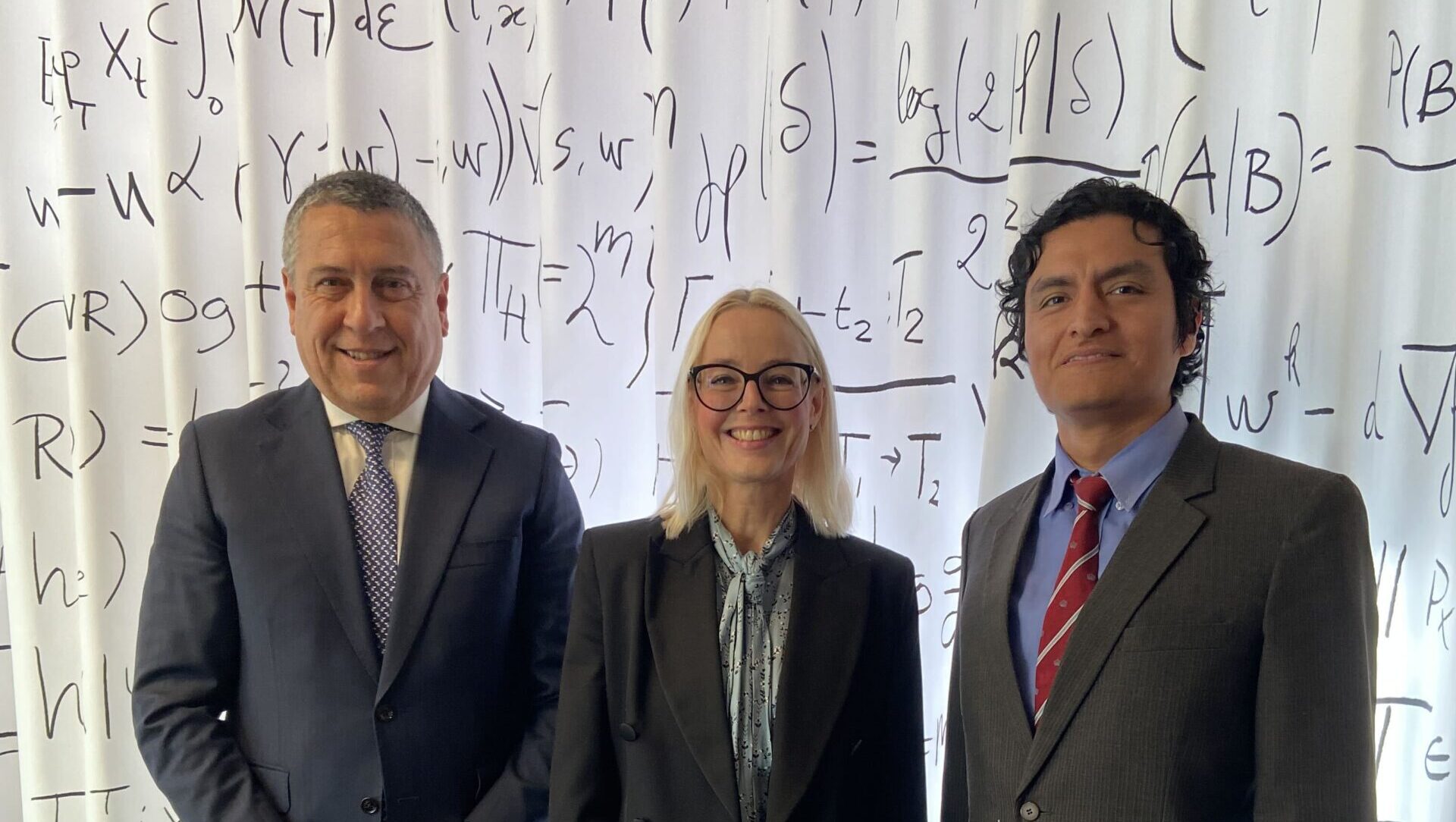
Professor Karl H. Johansson, Director of Digital Futures, has been involved in developing a new research collaboration between Ericsson, KTH and Nanyang Technological University (NTU Singapore) to advance AI-based positioning technologies for future 6G networks.
The initiative was announced on 19 October 2026 alongside the signing of the Joint Declaration on Strategic Cooperation on Trusted and Innovative Technologies between the governments of Sweden and Singapore. The declaration aims to strengthen cooperation between the two countries in emerging technologies.
Advancing AI and 6G for autonomous systems
The research initiative, Trustworthy 6G Positioning in Complex Environments: A Data-Driven Approach, brings together Ericsson, KTH and NTU Singapore to develop more reliable positioning technologies for autonomous systems operating in complex environments.
Accurate and reliable positioning is essential for technologies such as robots, drones and other autonomous systems, particularly in environments where conventional positioning methods face challenges. Potential applications include healthcare, manufacturing, logistics, smart cities, airports and ports.
The multi-year project, coordinated by Ericsson and starting in November 2026, will combine established positioning methods with artificial intelligence and automated antenna calibration. KTH will lead AI and algorithm development, while NTU Singapore will contribute expertise in robotics, sensor fusion, localisation and machine learning. Ericsson will provide mobile-positioning technology, test environments, network expertise and insights into standardisation.
The collaboration aims to combine complementary expertise from KTH and NTU Singapore, test new AI-based positioning methods in real-world 5G and 6G environments, and build a long-term research partnership between Sweden and Singapore. The initiative is supported by Sweden’s innovation agency, Vinnova, and aims to contribute to the development of future 6G standards.
“Future autonomous systems will need positioning that is not only accurate, but also reliable and trustworthy in complex environments. By bringing together expertise in AI, wireless communication and robotics, this collaboration creates an opportunity to develop and test new approaches for future 6G networks.” — Karl H. Johansson, Professor at KTH and Director of Digital Futures
The research announcement coincided with the signing of the Joint Declaration on Strategic Cooperation on Trusted and Innovative Technologies at Ericsson’s headquarters in Stockholm. The signing took place in the presence of His Majesty King Carl XVI Gustaf of Sweden and Singapore President Tharman Shanmugaratnam, as part of the Singapore state visit to Sweden.
Singapore President, Tharman Shanmugaratnam, and the King of Sweden, His Majesty King Carl XVI Gustaf, with Ericsson President and CEO, Per Narvinger, during the visit to Ericsson HQ in Stockholm today. Photo: Ericsson News
Ericsson President and CEO Per Narvinger welcomed the joint declaration, which seeks to boost cooperation between the two countries on trusted and innovative technologies. The declaration reflects a shared ambition to strengthen collaboration between government, industry and academia in areas such as technology and supply chain resilience, cybersecurity and trusted connectivity, trustworthy AI deployment and governance, and international rules, norms and standards.
The Ericsson–KTH–NTU Singapore research initiative provides a concrete example of how international research and industry partnerships can contribute to these ambitions. By bringing together academic expertise and industry experience, the collaboration will help address technological challenges and advance the development of trustworthy AI and future 6G networks.
For Digital Futures, the initiative highlights the importance of international collaboration between academia and industry in advancing digital technologies and supporting the development of a sustainable digital society.